
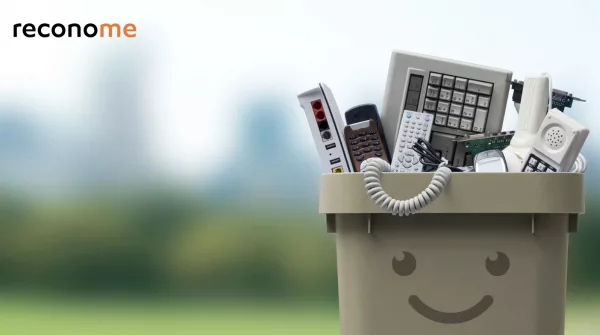
As a recent UN report highlights the failure of the UK – and indeed the world – to keep on top of the ever-growing problem of electronic waste, what needs to happen to reverse the tide before it’s too late?
The data tells a sobering story. Globally, the rise in electronic waste “is outpacing the rise in formal recycling by a factor of almost 5”. In the UK specifically, we have not implemented adequate measures to recycle e-waste effectively, resulting in significant and ongoing environmental and health risks. The growing mountain of discarded electronics, including corporate IT, smartphones, and household appliances, poses a serious challenge, and the solution lies in embracing a circular economy within the electricals industry specifically to tackle this mounting crisis.
In the context of electricals, circularity refers to a system where products, components, and materials are kept in use for as long as possible, minimising waste and reducing the use of raw materials. So what needs to be done to achieve large-scale change? Here is a summary of some of the key steps highlighted in the UN’s fourth Global E-waste Monitor (GEM) report:
- Investment in infrastructure: Just 22.3% of this waste is officially documented as collected and recycled in an environmentally sound way. Huge quantities of discarded electronic equipment is managed outside of formalised schemes, which ultimately leads to the release of toxic chemicals into the environment. Modern recycling facilities equipped with advanced technologies can efficiently extract valuable materials, reducing the need for virgin resources and lowering greenhouse gas emissions. Public and private sector collaboration is essential to fund and develop these facilities, ensuring they can process e-waste sustainably and effectively.
- Legislative action: All countries need to establish robust legislation and regulations that a) set and track rates of recycling, b) curb illegal shipment of electrical waste to less-developed nations and, in parallel, c) incentivise manufacturers to design products with longevity and recyclability in mind.
- Transparent, accurate and standardised reporting: “For industry and policymakers to truly exploit the positive circular economy potential of the electronics sector, reliable data must be freely available to inform decision making.” This in turn can drive effective international cooperation. By working together, nations can create a unified front to combat the e-waste crisis and drive the transition towards a circular electronics industry.
- Raising awareness: Many consumers and businesses are unaware of the hazardous materials contained in electronic devices, such as lead, mercury, and cadmium, which can leach into soil and water, causing severe pollution. Educational campaigns, fostering a culture of repair and reuse, alongside accessible recycling facilities, can encourage responsible disposal practices and increase participation in waste recycling programs.
The UK’s failure to manage e-waste effectively is a pressing concern that requires immediate action. Embracing circularity in the electronics industry offers a sustainable solution to this growing problem. By implementing robust legislation, raising public awareness, investing in recycling infrastructure, promoting repair and reuse, and fostering greater international cooperation, the UK can reverse the tide of electronic waste and pave the way for a more sustainable future. The time to act is now, before it’s too late.
At Reconome, we help businesses to play their part in giving their surplus IT equipment a second-life, by assessing tech with a view to repair and reuse wherever possible. In addition, we deliver repurposed IT into the hands of those who need it most, providing valuable resources to communities at risk of digital exclusion.
Get in touch today to discuss how we can help your business to meet and exceed their social and environmental obligations through the repurposing of your electronics.