

Your AI Upgrade Has a Disposal Problem. Have You Solved It?
· 3 min read
The AI infrastructure build-out is accelerating hardware retirement at a rate most IT teams have not planned for. New servers.
· 6 min read · Written by Bobby Ghayouri.
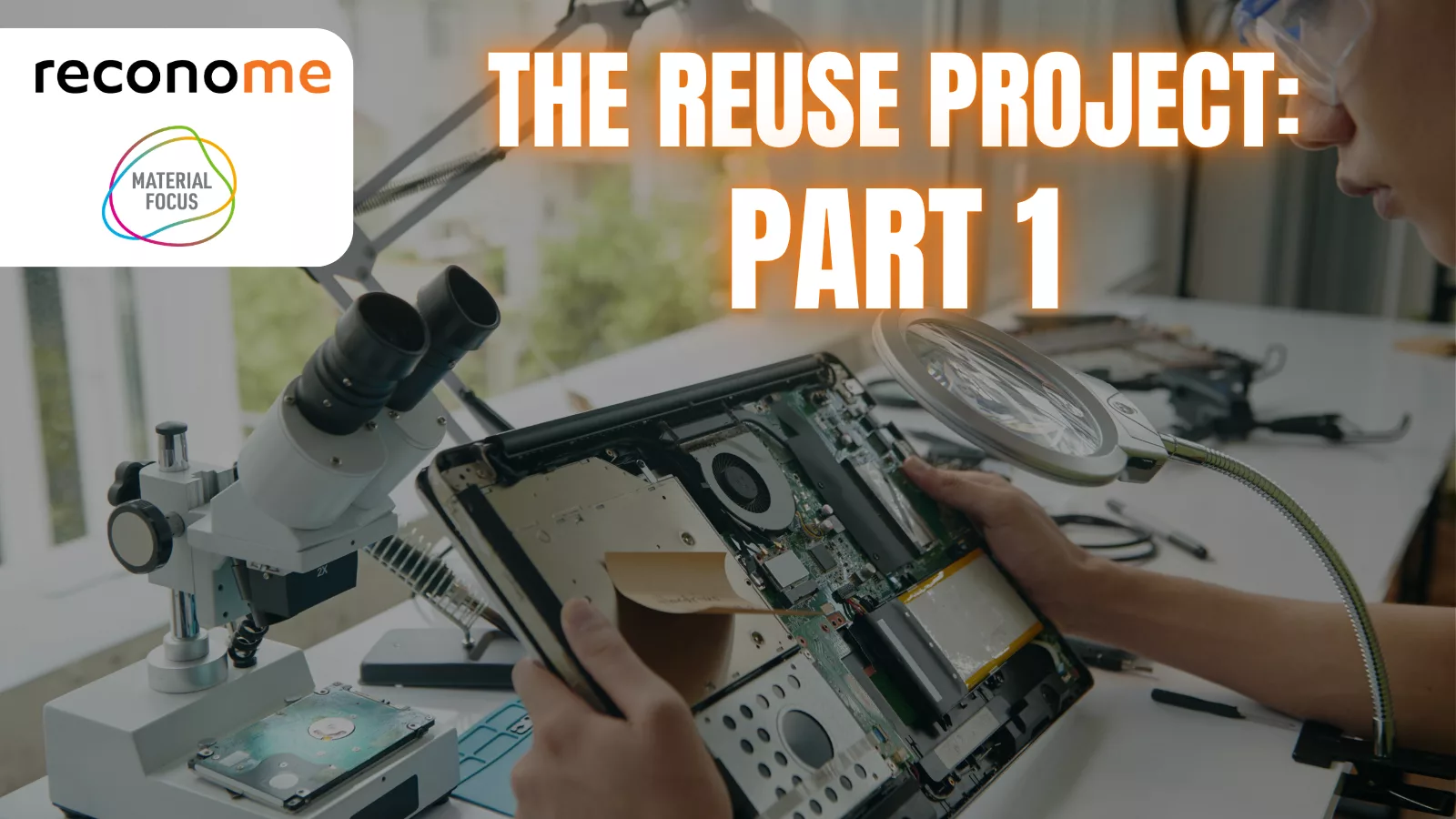
Part one of six. Over the next six months we are rebuilding how every device we handle gets its ending, funded by the Material Focus Circular Electricals Fund. We are starting with the problem that stops a device dead before anything else can even be attempted.
In February, Material Focus named Reconome one of the first four recipients of its Circular Electricals Fund, money set aside for projects that keep electricals and the materials inside them in use for longer. Our aim is simple to say and hard to do: Every device that comes through our doors should get a considered decision about its future rather than a fast one, ensuring more devices are given a second life in the hands of people in digital poverty, and less are recycled.
We are building it in five stages, and we are writing about one of them every month until the whole thing is live in the new year. What we are building, what it changes, and where it does not work yet. This is the first.
We started with locked devices. Here is why.
Somewhere in a processing warehouse right now there is a three year old laptop in full working order that is going to be destroyed and recycled. Nothing is wrong with it. The battery holds charge, the screen is clean, it is worth real money, and it would change somebody’s life if it landed in their hands. It is going to be destroyed because nobody removed it from an MDM console before it left the building.
That is a locked device. Across our industry it is one of the most ordinary ways a perfectly good laptop ends up as scrap, and it happens before a single one of the clever decisions we are building can even be made.
A locked device is one that still answers to somebody else. It might be enrolled in Jamf, Intune or Google Workspace. It might carry a BIOS password set by an engineer who left the company two years ago. It might be signed into an Apple ID through Find My, held by Android Factory Reset Protection, registered in Windows Autopilot, or running a firmware persistence agent like Absolute.
The lock type changes. The outcome rarely does. If we cannot get into the device, we cannot resell it, we cannot donate it, and it will not be passed on to anybody.
So it stalls. Then, usually, it gets destroyed. Three things are lost in that moment.
It is almost never negligence. It is friction.
By the time a device reaches us, the IT team that owned it has moved on to the refresh. The person who set the BIOS password has left. Someone now has to find the right admin, in the right console, for the right serial number, and repeat that dozens of times. The request usually arrives as an email with a spreadsheet attached, lands in an inbox that is already full, and slides quietly down the list.
Weeks pass. The devices sit. At some point, destruction becomes the only answer when a wall is hit. Nobody chose that outcome. The process chose it for them.
Of the five stages in this project, locked devices is the smallest and the least technically interesting. We put it first anyway. Everything else we are building assumes we can get into the device, and a lock is the one failure that makes the rest of it academic. Fix the front of the process, and the clever parts further down actually get a chance to run.
So we are building a closed loop between our operations and our Reconome Customer Portal.
The moment we detect a lock on one of our partners’ devices, they are notified. They receive an alert the first time it happens on a collection, and a second once we have finished reporting locks for that collection, so you know the picture is complete.
Inside the Customer Portal, locked devices sit under the collection they came from, with their details and their status. From there our partners can easily resolve them. They can mark a device as unlocked once it has been cleared; submit a BIOS password securely, encrypted in transit and at rest, masked on screen, seen only by the team handling that unlock and deleted once the job is done.
It can all be done in bulk. Two hundred devices from the same console should take one action, not two hundred.
Every resolution syncs straight back to us with the audit trail attached. No spreadsheet. No chasing. No devices sitting in limbo while an email thread goes cold.
Tooling only helps if the person at the other end knows what to do. So alongside the workflow we have published a Device Unlock Guide covering every lock type we detect: MDM enrolment, BIOS and supervisor passwords, iCloud Activation Lock, Android Factory Reset Protection, Windows Autopilot and Absolute Persistence. Each one is a short set of steps for your IT team, including what to do when the password is genuinely gone and the manufacturer has to be involved.
Most locks take a couple of minutes to clear once you know which console to open.
Fewer devices written off for a reason that had nothing to do with their condition. More devices reaching the people that need them the most. Better returns from your estate, because a device we can wipe is a device we can sell or rehome. And a clean, auditable record of every locked device, what happened to it, and who decided.
In regards to the overall projhect, this is the part that had to come first, because a lock does not just produce a bad decision. It skips the decision entirely.
A laptop should not end its life over a login.
Next in The Reuse Project, part two: how you work out what a device is actually worth, and why almost nobody does. In the meantime, if you have kit in your estate you suspect is still enrolled somewhere, tell us before it leaves the building. That is the cheapest moment to fix it.
Reconome is a B Corp certified ITAD company. We collect surplus IT, erase it to the NIST 800-88 Rev.2 standard, refurbish it and rehome it with people who need it.
See how ITAD with Reconome worksMore insights
· 3 min read
The AI infrastructure build-out is accelerating hardware retirement at a rate most IT teams have not planned for. New servers.
· 3 min read
There is a device in your organisation that no security dashboard is watching. It is not the laptop on a

· 3 min read
If you have priced up new laptops for your team lately, you already know. The quote came back higher than
Let’s discuss how your surplus technology can drive positive change.